Why the Next Industry Leaders Won't Be the Fastest AI Adopters

Discovering the New Business Model Behind Modern Moats
Most CEOs believe that the AI race will go to the fastest. You adopt early. You launch more pilots. You put lots of tools into lots of departments before your competition does.
And speed matters, but it probably won’t be the thing that separates the next generation of industry leaders from competitors.
The next industry leaders won’t be the fastest AI adopters. They’ll be the most visionary and tenacious refounders. They’ll rebuild their companies around adaptive Modern Moats. And many will do it as part of a movement of CEOs who are learning to build these moats together.
When I first wrote this article two years ago, I described two forces that I thought would reshape small and mid-sized companies: a new AI-first business model, and a social movement of people who would build it. Apparently, those ideas held up. But the shape of those forces has evolved. Today, the question is not how fast your company adopts AI. The question is about what your AI is building.
Both the new business model and the movement start with a question that every CEO should ask (before the market asks it for them):
Is your moat real, or just historical?
The Business Model Shift: Adding AI Is Not Refounding
Most companies are adding AI powers to the business model they have up and running. So Marketing gets a content engine. Finance gets faster forecasts. And Customer Service gets an agent that can answer questions at 2 a.m. in Swahili. Every project shows real results, and makes a good slide for the board.
These AI wins are not fake. That is what makes an important pattern so hard to see.
I call it The Scattered Wins Delusion: productive fragmentation disguised as transformation. Just because your department-level AI wins are creating capability doesn’t mean they are creating defensibility. After all, a competitor can buy the same tools and copy most of those wins in months. The wins are accumulating, but they’re not compounding.
Sears once gave us a cautionary example. ****Sears ran their departments well. Their order processing, customer service, and distribution all were improving. But at the same time, Walmart started to build an integrated system. So their inventory data shaped pricing. Their pricing shaped distribution. Their distribution fed back into inventory. Basically, every improvement made the other parts stronger.
So while Sears was defending scattered departmental wins, Walmart was building an integrated system that could adapt, where each improvement made the others stronger.
Most AI initiatives today pass what I call The Working Standard. The question is "Is it working?" and the answer is yes. However, a better test is The Compounding Standard: "Does each cycle make the next cycle better, without us having to push it?" Only architecture passes that test. By architecture, I mean purposefully designing how your people, AI, data, and workflows connect so that what one part of the business learns makes the others stronger
And this is why speed alone fails. Fast AI adopters often have high execution velocity. They ship AI faster. But in the age of AI disruption, what builds a business moat is architectural velocity, where each learning cycle makes the next one better. My point here is that it’s possible for a company to move fast and yet still be standing still from a strategic sense.
This is the difference between adding AI to your business model and refounding your business. Refounding means you’re making founding-level architecture decisions inside an established, successful business. You’re rebuilding your competitive foundation (like a founder of a startup) for the latest conditions (the economics of the Age of AI). You stop optimizing the systems that made you successful in the old era.
Refounding does not mean you tear down what works. I’ve seen that the most successful Mid-market companies tend to use the Edge-Stack methodology. First, you build the new architecture on the edge of the business. Then you prove that it can outperform the old way. Then you migrate deliberately. Your core business keeps funding the company while your new architecture earns its place.
The Architectural Answer: The Four Mandatory Modern Moats™
Since scattered AI wins are the problem, what does Modern Moat architecture look like?
Traditional moats were like walls. Things like economies of scale, your brand, patents, and switching costs helped to keep competitors out. These “walls” are static. And as AI makes expertise, content, and analysis cheap, many of those walls get thinner every quarter.
Adaptive, AI-native Modern Moats, on the other hand, work like an immune system. They learn. They get stronger with every use. Every transaction makes the whole system smarter, not just one department.
Any company that wants adaptive Modern Moat architecture has to build four foundations first. I consider them to be like the anatomy of a living organism, because they work as one system (as opposed to a checklist).
The Operating System: Agentic Leadership & Teamwork™. This moat sets how people and AI agents work together, who makes which decisions, and how the team keeps critical knowledge as roles change.
The Nervous System: Unified Intelligence Architecture™. This moat sets how intelligence flows across the company and compounds. Without it, every AI win stays trapped in the department that made it.
The Skeleton: Governance and Trust. This moat sets whether your system can carry weight under scrutiny from boards, regulators, and enterprise buyers. And just like bone, it gets stronger where it is stressed.
The DNA: The AIRD Moat™. This is like the personality of the organism. This moat sets what makes your company impossible to copy.
When the four work together, a win in one area feeds the others. This is how you translate capability into defensibility.
Modern Moat architecture also gives you a way to test every competitive advantage you claim. Does it improve your economics? Then that is the benefit. Does it stop competitors from copying it? Then that is the barrier. And then there’s the question that most CEOs never hear: does replacing you cost your customer more than losing that customer costs you?
A barrier makes you hard for your competitors to copy. But favorable asymmetry makes you hard for customers to leave: replacing you costs them more than losing their business costs you. The first makes you defensible. The second makes you indispensable.
The Social Movement: Why Modern Moats Require CEOs to Build Together
Here is the uncomfortable truth. You can’t spot your own blindspots.
When your company passed $10 million in revenue, you probably outgrew your first circle of advisors. Of course, your leadership team is smart, but they are also very close to the current business model. Some of them may have built it. And even your board may ask about AI progress, but boards often are not distinguishing between shipping fast and learning fast.
Let’s face it. CEOs are often isolated. And isolation does more than make the job lonely—it multiplies strategic blindspots. You end up making $10 to $50 million architecture decisions in a room where nobody has enough reason (or independent perspective) to challenge your assumptions.
The Modern Moats movement is a technical shift, a business strategy shift as well as a leadership mindset/paradigm shift. That is why these shifts need a movement, and not just a method.
The Modern Moats Movement gives CEOs a shared language for a problem they can feel but often can’t name. Terms like scattered wins, refounding, and adaptive moats let a manufacturing CEO and a professional services CEO compare notes and see the same pattern from different sides.
The Business Moat Private Network℠ is where the movement goes deep. It is a confidential future-of-advantage council of about 12 non-competing mid-market CEOs. The standard in the room is psychological safety with intellectual courage. You are safe. Your assumptions are not. This is how to gain a first-mover advantage and avoid disruption.
The Network runs on two engines. The Identity Engine is where CEOs become Modern Moat Builders through real decisions and real peer challenge. The Intelligence Engine captures strategic patterns that no single CEO could build alone. As members grow, they bring better patterns to the room. Better patterns make the Network smarter. A smarter Network helps every member decide better. The Network doesn’t gain value by adding people as much as it gains value from the quality of the thinking compounding over time.
Some CEOs need a different first step. For them, The Modern Moats Intensive℠ is a concentrated diagnostic for a CEO with a decision close and a short timeline. It shows what is durable, what is vulnerable, and which few decisions deserve attention now. The Intensive is for one decision while the Network is for the decisions that keep coming.
The New CEO Identity: From AI Adopter to Modern Moat Builder
In addition to the strategy question, a lot of CEOs are asking a more profound question: who do I need to become to lead a refounded company?
The powerful skills you used to grow your company are still important. You optimized. You executed. You beat competitors on discipline. Those skills still matter. But the job is changing. It is moving from optimizing yesterday's models to continuously finding, building, and refreshing the moats that tomorrow requires.
Many leaders respond by trying to adopt faster. They launch thirty experiments and report every AI pilot as progress. But others are choosing differently. They’re picking three to five asymmetric bets (where the strategic upside potential is much greater than the cost of testing them). They ask which competitive power each bet will strengthen. They’re testing their assumptions with peers before capital and talent make those assumptions expensive to reverse.
This visionary and tenacious group are what I call Modern Moat Builders. The identity is not about how much you know about AI. It’s about how you make decisions.
It would be dishonest for me to say that making this leap is easy. The leap asks you to question a system that you spent years making work. That is exactly why the CEOs who tend to make it don’t make it alone.
Discover the Modern Moats Movement and The Business Moat Private Network℠
Many of the companies that struggle in the next 3 years won’t be poorly run. Many of them will be fast adopters that optimized for yesterday’s economics of competitive advantage.
The process of discovering a new business model starts with an honest look at your own advantage. The best time to ask whether your moat is real or just historical is now, while you are still winning and your options are still open.
If this resonates, explore the Modern Moats Movement and The Business Moat Private Network℠. See how CEOs are using peer challenge and shared strategic intelligence to build adaptive Modern Moats together. [Explore the Network →]
If you’re not ready for that conversation yet? Subscribe to The AI-Native Moat, the BusinessMoat.com newsletter for CEOs who want to see the pattern early.
[Subscribe Here→] https://www.theainativemoat.com/
Scattered wins will evaporate. But adaptive moats strengthen with use. Now is the time to build your moats.
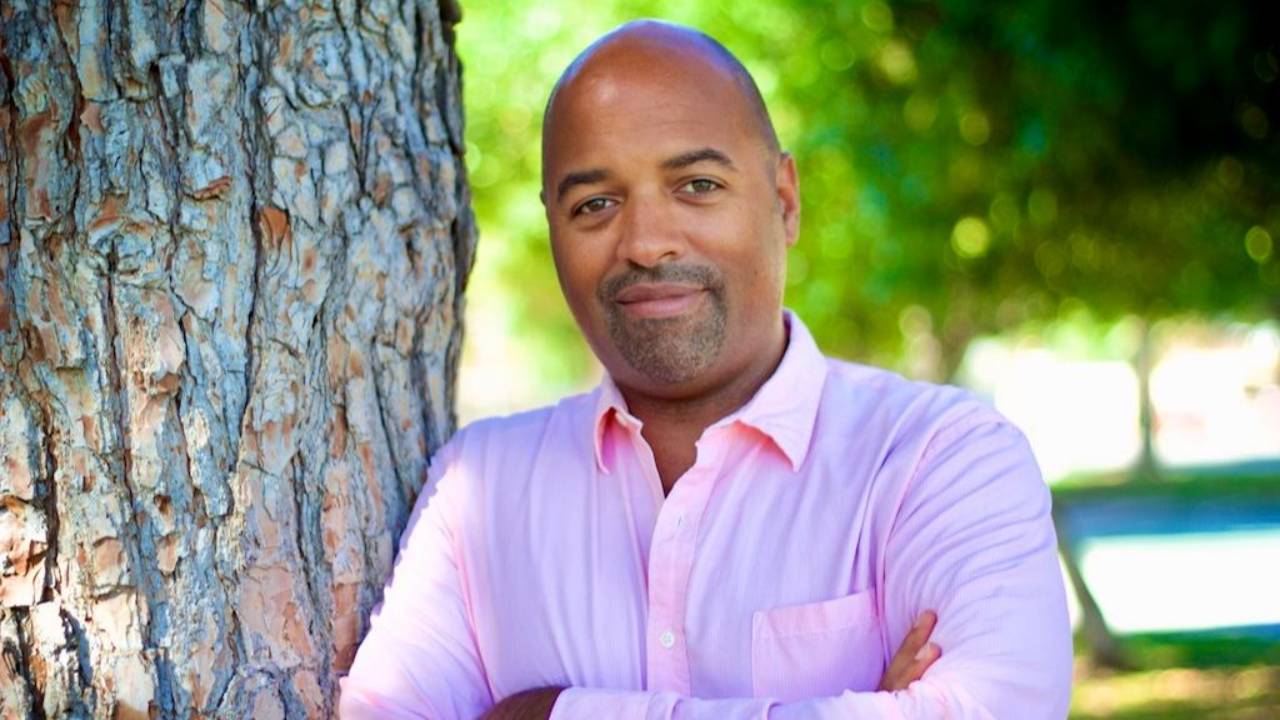
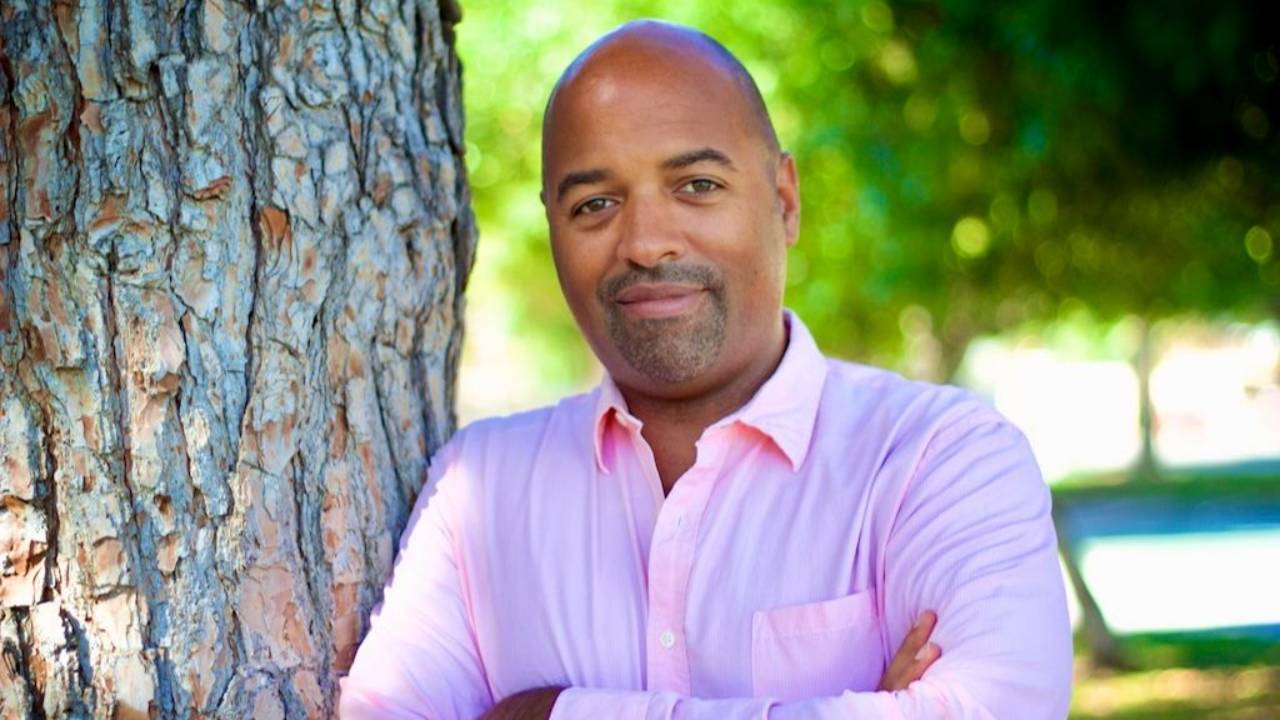
Hi, I'm Ray East
I'm a Modern Moat Strategist for the Age of AI and the founder of Horizon East Inc. and BusinessMoat.com. For over 20 years, I’ve helped businesses create competitive advantage. Today, I guide mid-market CEOs to find what remains defensible, what makes their companies difficult to replace, and what they must build next.